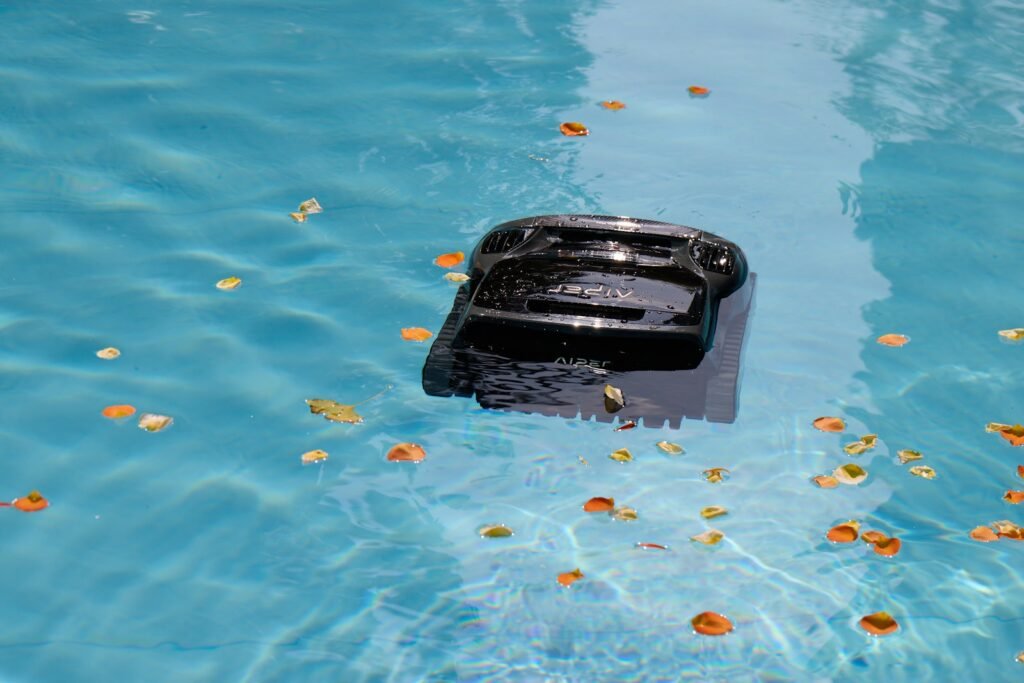
If you’ve got trees anywhere near your pool, the last two weeks of October are the hardest of the year. One breezy afternoon can dump more debris into the water than the entire month of July. And because a lot of pools are still open right now, either waiting for the water to cool enough to close or running through a mild fall, the leaves are landing in water that’s still warm enough to grow algae.
Leaves aren’t just a cosmetic problem. Left in the water, they stain your surfaces, eat your chlorine, feed algae, and clog the equipment you’re relying on to clean up after them. Here’s what’s actually happening when leaves sit in your pool, and a practical routine for keeping ahead of them until the trees are bare.
Why leaves are worse than other debris
Dirt and pollen mostly get trapped by the filter. Leaves are different, because they’re organic material that starts breaking down the moment it hits the water. That breakdown causes four separate problems.
1. Tannin stains
Oak, maple, and many other leaves release tannins, the same compounds that turn tea brown. A leaf that sinks and sits on the floor for a few days can leave a leaf-shaped brown or tea-colored stain, especially on plaster and lighter-colored finishes. Vinyl liners stain too, and those stains can be harder to lift.
2. Higher chlorine demand
Every leaf that decomposes in the water uses up free chlorine. During heavy leaf drop, you can do everything right on your normal schedule and still find your chlorine reading near zero a day or two later. Low chlorine plus warm water is exactly how a clear pool turns green in fall.
3. Phosphates that feed algae
Decaying leaves release phosphates, which are a nutrient for algae. Phosphates don’t cause algae on their own if your sanitizer is where it should be, but they make it much easier for algae to take hold when chlorine dips. That’s part of why some pools seem to bloom right after a big leaf storm.
4. Clogged skimmers and strained pumps
A packed skimmer basket or pump basket chokes off water flow. Your pump works harder, circulation drops, and in the worst case the pump can run dry and overheat. Low flow also means your filter and chlorine aren’t reaching the whole pool, which makes problems 1 through 3 worse.
The fall leaf routine that actually works
The single most important rule: get leaves out before they sink. A floating leaf is a 10-second job with a net. A sunken leaf is a vacuuming job, and if it’s been there a few days, it may already have left a stain.
Skim daily during peak drop
For the few weeks your trees are dropping hardest, plan on a quick skim every day, and twice on windy days. Five minutes in the morning beats an hour of vacuuming on the weekend. Work from the center of the pool out toward the edges, and let the skimmer pull in what drifts toward it.
Use a leaf rake, not a flat skimmer
A flat skimmer net is fine for a few bugs in July. For fall, you want a leaf rake, a net with a deep bag that holds a big load of leaves before you have to dump it. It can also scoop leaves off the floor without stirring up as much silt.
Empty the skimmer and pump baskets every day
Check both baskets at least once a day while leaves are falling. If the pump basket fills up regularly, that’s a sign too much debris is getting past the skimmer. Keep a spare skimmer basket on hand so a cracked one doesn’t sideline you mid-season.
Add a leaf canister to your vacuum line
If you vacuum manually or use a suction-side cleaner, an inline leaf canister (also called a leaf trap) catches leaves in a big mesh basket before they reach your pump. It’s one of the cheapest upgrades you can make for fall, and it can save a pump basket from packing solid in minutes. Most pool supply stores carry them, and you can find leaf rakes, canisters, and spare baskets with our recommended pool supplies.
Let a robot do the floor
Robotic cleaners are especially useful in fall because they pick up sunken leaves before they can stain. Look for a model with a large debris basket, since a small fine-mesh filter fills up quickly in leaf season. If you’ve been on the fence about one, our roundup of the best robotic pool cleaners under $500 is a good place to start.
Keep the pump running longer
This isn’t the time to cut back on filtration. Running your pump longer during heavy leaf drop keeps leaves moving toward the skimmer and keeps chlorine circulating. If you’re not sure your pump is up to the job, our pool pump and filter sizing calculator will tell you whether it’s right-sized for your pool’s volume.
Keep your water chemistry ahead of the leaves
Test your water more often than usual during leaf season, every two or three days if you can. Pay the most attention to free chlorine, since that’s what the leaves are burning through. A few habits help:
- Shock after a big leaf event. Once you’ve cleared the leaves, shock the pool to burn off the organic load they left behind. Shock at dusk so the sun doesn’t eat your chlorine before it can work.
- Keep pH in range. Chlorine works best with pH between 7.2 and 7.6. If heavy fall rain is also hitting your pool, check pH and alkalinity after each storm, as covered in our guide to fixing a cloudy pool after rain.
- Consider a phosphate remover. If you keep fighting algae despite good chlorine readings, have your phosphates tested. A phosphate remover can take away the extra food source leaves leave behind.
To figure out how much chlorine or shock your specific pool needs, plug your gallons and current readings into our pool chemical and chlorine dosage calculator.
How to remove leaf stains
If a leaf got away from you and left a brown mark, don’t panic. Most fresh tannin stains are organic, which means chlorine can break them down.
- Confirm it’s organic. Rub a small amount of chlorine on the stain (a pool chlorine tablet in a sock on a pole works for floors). If the stain lightens quickly, it’s organic. If it doesn’t budge, it may be a metal stain, which needs a different treatment.
- Brush and shock. For organic stains, brush the area well and shock the pool. Many light stains fade within a day or two.
- Spot-treat stubborn marks. For a stain that won’t fade, a spot treatment with granular chlorine applied directly onto the stain often works on plaster. Don’t do this on vinyl liners or painted surfaces, since concentrated chlorine can bleach or damage them. For those, use a stain remover made for your surface type.
Old, set-in stains on an aging plaster surface sometimes won’t come out at all. If your pool is covered in years of stains and etching, it may be time to price out a refinish with our pool resurfacing cost calculator.
Should you close before or after the leaves fall?
This is the classic fall dilemma. The usual advice is to close once your water stays below about 65°F, which for much of the country is right when leaf drop peaks. You have two reasonable options:
- Close on schedule and add a leaf net. Put a leaf net cover over your winter cover. When the trees are done, pull the net off and dump the whole load at once instead of scooping a soggy mat of leaves off your winter cover. This is the cleanest option for heavily wooded yards.
- Wait out the worst of the drop. If your water is still warm and you’re willing to skim daily, keeping the pool open a few extra weeks lets you clear most of the leaves before you cover it. Just keep your chlorine up the whole time, since warm water plus leaves is algae’s favorite combination.
Either way, never close a pool with leaves on the floor. Anything you trap under the cover will keep decomposing all winter, and you’ll pay for it with a stained, swampy opening next spring. When you’re ready, follow our fall pool closing checklist for the full step-by-step process.
Long-term fixes for leafy yards
If every fall turns into a leaf battle, a few bigger changes can cut the work for years to come:
- A solid or mesh safety cover keeps debris out entirely during the off-season and adds a real layer of safety. See what one would cost for your pool with our pool cover cost calculator.
- Trimming overhanging branches reduces how much lands in the water, and it’s easier to do once the leaves are down and you can see the branch structure.
- Rethinking landscaping near the pool. If you’re planting new trees, keep deciduous trees well back from the water and favor plants that don’t shed heavily.
The bottom line
Leaves are a few weeks of extra work, not a crisis, as long as you stay ahead of them. Skim daily, keep your baskets empty, keep your chlorine up, and never let leaves sit on the floor long enough to stain. Do that through the peak of the drop, and you’ll close your pool with clean water and open it next spring without a cleanup project waiting under the cover.
Leave a Reply