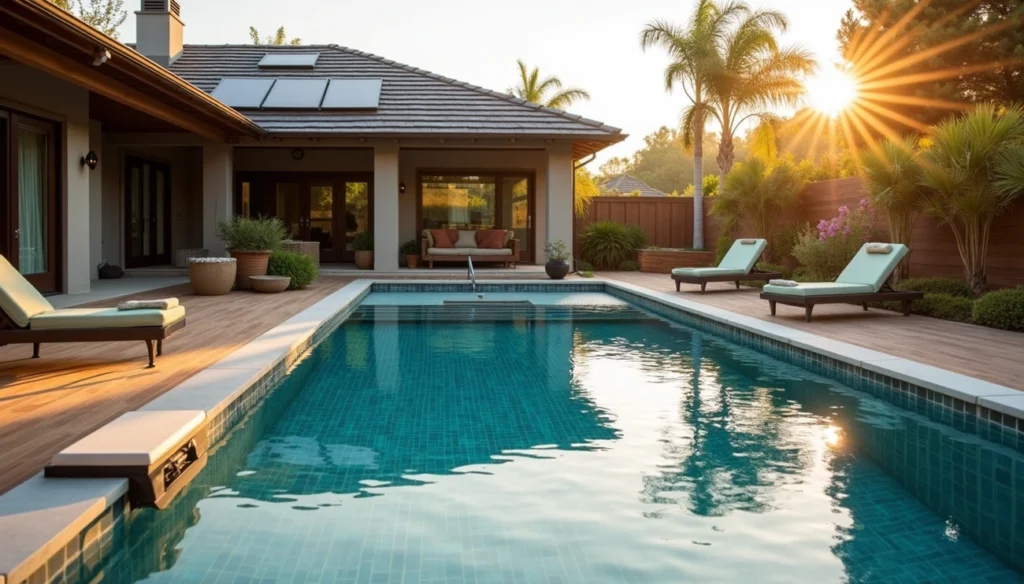
Eco-friendly pool materials can boost your property’s sale value by 30% on average. These sustainable swimming options have become more appealing than ever. Brazilian properties mostly lack pools – about 72% don’t have one. Yet, 70% of people dream of having a pool at home. The pandemic has made pools even more desirable, with a quarter of people now placing greater value on homes that feature swimming pools.
Traditional pools pose several environmental challenges due to excessive water use and chemicals. You might wonder if swimming pools harm the environment. They can cause problems, but sustainable options now exist. Pool installations leave a smaller environmental footprint when you use recycled tiles, low-impact decking, and responsibly sourced materials. Pool covers prove highly effective and can help save thousands of gallons each year, especially when you have warmer weather. The pool industry has changed dramatically, from construction methods to pool floats made from sustainable materials.
Let’s explore the reasons smart pool owners switch to sustainable materials and see how these choices benefit both your property and our planet in 2025.
Why Eco-Friendly Pools Are Gaining Popularity
People love eco-friendly pools these days. Several factors have changed how we use our outdoor spaces. These pools tackle environmental issues while keeping the luxury and fun of traditional installations.
Rising environmental awareness among homeowners
The last several years have seen a dramatic change in what homeowners want. Traditional backyard pools with their chemicals and high resource use no longer match today’s values. Climate change concerns have pushed most homeowners to think green in everything they do.
Millennial homeowners’ priorities have pushed the need for eco-friendly options in recreation and leisure industries. These homeowners look for choices that match their values. This makes eco-friendly pool options very attractive to them.
Pool experts say this isn’t just a trend. More people understand and learn about these options. Eco-friendly pools are becoming the norm rather than the exception. The idea has caught on so well that many suppliers now only sell ecological options to meet what buyers want.
Impact of traditional pools on water and energy use
Traditional swimming pools leave a big environmental footprint. A home pool needs 20,000 to 30,000 gallons of water to start. Hot weather can make it lose up to a quarter of that water every week. This ongoing water use puts pressure on resources, especially where droughts are common.
The energy use might be even more worrying. Pool pumps in America create about 10 million tons of greenhouse gases each year. That equals pollution from 1.3 million cars. A regular pool pump uses about as much energy as a whole house’s air conditioning.
Natural filtration systems can cut energy use by about 50%. These improvements help save resources and reduce long-term costs.
Post-pandemic lifestyle shifts and home upgrades
Lockdowns changed how homeowners saw their outdoor spaces. This new viewpoint sparked interest in eco-friendly home improvements. People spent more time at home and realized their old pools didn’t match their environmental values or budget priorities.
The timing was perfect for new pool technology to meet these needs. Variable-speed pumps, saltwater systems, and solar heating now offer practical choices that cut both environmental effects and running costs. Smart pool owners now see these eco-friendly options as must-haves rather than luxury add-ons.
Top Eco-Friendly Pool Materials in 2025

Pool design in 2025 adopts green practices through innovative materials that blend beauty with environmental responsibility. Today’s pool owners choose eco-conscious options that maintain style and functionality.
Recycled glass tiles and sustainable decking
Waste transforms into beautiful pool surfaces through recycled glass tiles. These tiles naturally take up to 1 million years to decompose, which makes their recycling vital for protecting our environment. The tiles deliver outstanding durability and reduce landfill waste. The United States generated 12.3 million tons of glass in 2018, yet only 3.1 million tons were recycled. Colors range from iridescent turquoise to celestial blue that create vibrant underwater atmospheres while supporting sustainability.
Accoya wood serves as an excellent eco-friendly option for pool surrounds. This modified timber comes from FSC®-certified fast-growing pine and includes a 25-year warranty for water contact. The material stays cooler under your feet and resists warping in poolside conditions, unlike conventional options.
Natural stone and clay-based finishes
Low-VOC sealants and adhesives
Modern pools now feature green adhesives such as Eco-Flex 9500, a VOC-compliant formula that provides UV stability without harmful chemicals. These products create safer pool environments without solvents or isocyanates. SureCrete’s Super WB protects decking with strong, glossy coverage and less than 100 g/L VOC content.
Saltwater chlorination systems
Saltwater generators provide an elegant solution instead of traditional chlorination. These systems turn regular table salt into chlorine through electrolysis. The chlorine sanitizes the pool and reverts to salt, creating a continuous cycle. Saltwater pools reduce chlorine handling and feel gentler on skin, suits, and hair.
Solar-powered pool covers and heaters
Solar pool covers cut heating costs by up to 45% with 16 hours of daily use. Solar heating systems eliminate the need for electric or gas heaters. Most owners recover their $3,000-$7,500 investment within seven years. These systems last over 20 years with minimal upkeep.
Eco-friendly pool floats and accessories
Traditional pool toys contain harmful polyvinyl chloride (PVC) that might take up to 1,000 years to decompose. Modern alternatives use food-grade silicone, natural rubber, bamboo, and plant-based materials. Quut now produces phthalate-free inflatable pools, rings, and noodles.
How These Materials Help the Environment
Eco-friendly pool materials deliver clear environmental benefits that go beyond just looks. These green options tackle several key environmental issues at once and create pools that line up with conservation values.
Reducing chemical runoff and water pollution
Pool chemicals often leak into nearby ecosystems when people don’t dispose of them properly. This can harm aquatic life and affect water quality. Saltwater chlorination systems are a great alternative that creates chlorine naturally through electrolysis. This creates a self-sustaining cycle that uses fewer chemicals. UV filters and ozone systems clean pool water effectively without harsh chemicals. Pools designed with plant-based filtration need fewer chemical treatments because aquatic plants naturally remove excess nutrients and contaminants.
Lowering energy consumption with smart systems
Energy-efficient pool equipment cuts carbon emissions by a lot. Variable-speed pumps can save up to 90% more energy than regular single-speed pumps by adjusting their speed based on what the pool needs. LED pool lights use up to 80% less power than standard halogen bulbs and last much longer. On top of that, automation technology saves energy by running pool systems when power demand is low. Solar heating systems eliminate the need for fossil fuels, and most systems pay for themselves within seven years through lower energy bills.
Minimizing waste through durable, long-lasting materials
Eco-friendly pool materials last longer, which means less replacement and waste. To cite an instance, fiberglass pools never need resurfacing and cost less to maintain over time. These pools’ seamless shells contain no metals that rust or release harmful chemicals into groundwater. Recycled glass tiles turn waste into beautiful, lasting pool surfaces and keep materials out of landfills. Sustainable deck materials like modified timber come with 25-year warranties even near pools.
What Smart Pool Owners Are Doing Differently

Smart pool owners in 2025 look beyond green materials. They welcome complete practices that reduce environmental effects and streamline processes.
Choosing local and responsibly sourced materials
Today’s homeowners prefer materials like gravel, stone, and clay over traditional concrete or fiberglass. They choose recycled glass tiles from post-consumer glass and sustainably sourced pavers to minimize quarrying effects. Local materials help cut down transportation emissions and boost regional economies.
Working with eco-conscious pool builders
Smart planning with specialized builders helps create pools that merge with local ecosystems. These experts know how to combine filtering strategies with native plants to turn pools into thriving ecosystems. Pool owners look for contractors who use industrial processes that reduce environmental effects during installation.
Investing in long-term savings over short-term costs
Eco-friendly options cost more upfront but pay off over time. Variable-speed pumps can save up to 55% on energy costs by using minimal power. Energy-efficient equipment, solar heating, and durable finishes cut down utility and maintenance costs substantially.
Educating themselves on sustainable pool care
Smart owners keep up with innovations like saltwater chlorination systems that need fewer chemicals. They follow regular maintenance schedules for natural filtration systems and check plant health and filter media. Smart water testing helps them use the right amount of chemicals, which reduces waste and keeps water quality perfect.
Conclusion
Eco-friendly pool materials are nowhere near a passing trend in 2025. This transformation toward green practices shows homeowners’ environmental awareness and smart financial planning. Pool owners who choose sustainable options see their property values jump 30% higher while reducing their ecological footprint.
Numbers tell the story well. Traditional pools waste water, need harsh chemicals, and burn through energy. Recycled glass tiles, sustainable decking, and saltwater systems look beautiful without hurting the environment. On top of that, solar-powered equipment and natural filtration methods save substantial money over time.
Our post-pandemic lifestyle has changed how we view outdoor spaces that match our values. The choice becomes simple – eco-friendly pools give better value, lower environmental damage, and more enjoyment.
The original cost might be higher than traditional pools, but savings quickly make up the difference. Variable-speed pumps cut energy use by up to 90%, and solar heating systems pay off within seven years. Durable, responsibly sourced materials need fewer replacements and create less waste.
Sustainable practices shape pool ownership’s future. Building a new pool or upgrading your existing one with eco-friendly materials balances luxury with responsibility. Smart pool owners already know this – will you join them in making this change?
Leave a Reply