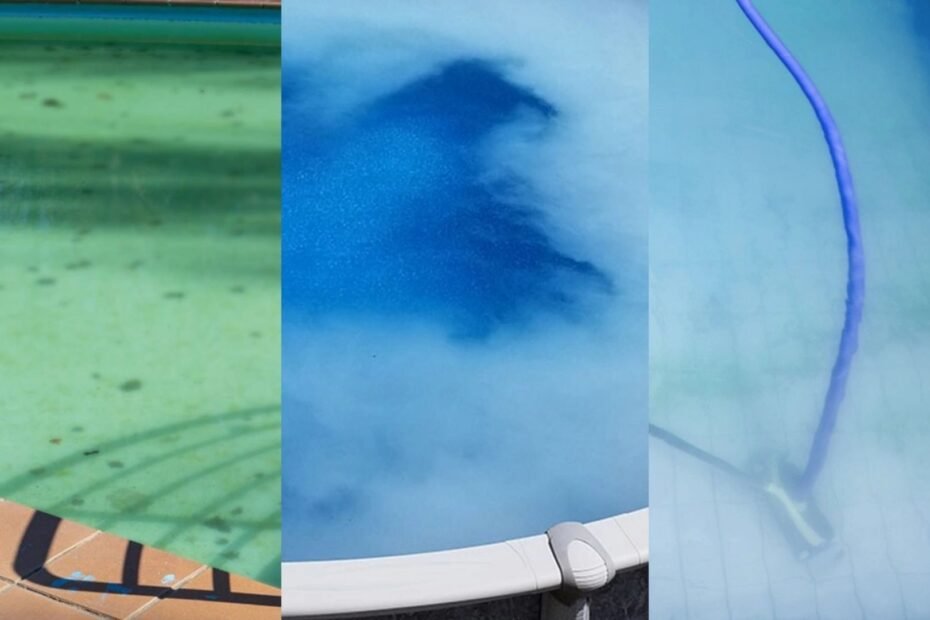
Cloudy pool water after rain ranks among the biggest headaches for pool owners. A heavy downpour can disrupt your pool’s water chemistry, which leads to murky water and makes swimming potentially unsafe. Your crystal-clear pool can turn into a cloudy mess within hours of rainfall.
Rainwater carries chemicals, minerals, and pollutants that mess with your pool’s pH levels and total alkalinity. On top of that, it dilutes the chlorine in your pool and creates perfect conditions for bacteria and algae to thrive. Your pool might even turn green after a heavy rain if you have trees nearby. This detailed guide will show you how to clear up a cloudy pool after rain and whether you should shock your pool after rainfall (quick answer: you probably should!).
How Rain Makes Your Pool Cloudy
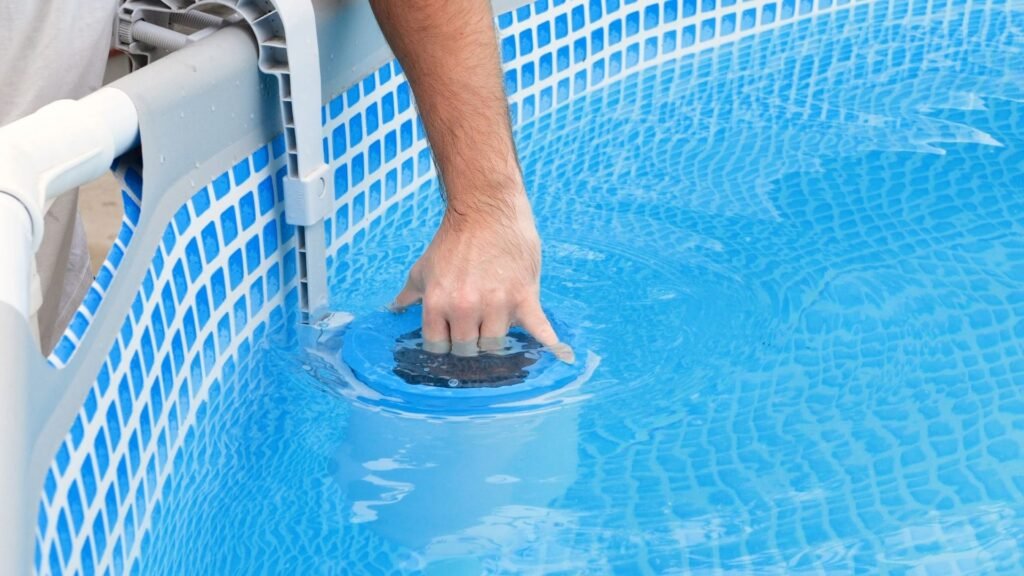
Rain does much more than just add water to your pool. Your water chemistry changes through several mechanisms that work together to create that frustrating cloudy appearance.
Dilution of chlorine and other chemicals
Rainwater entering your pool starts diluting your carefully balanced chemicals right away. You won’t find any chlorine or sanitizers in pure rainwater, so your protective chemical levels drop with each raindrop. Bacteria and algae get their chance to thrive from this dilution. Your chlorine levels plummet during heavy downpours as they keep fighting the new contaminants from the rain. Your once-clear water becomes vulnerable to cloudiness even after a light shower depletes the chlorine levels.
pH and alkalinity imbalance
The natural acidity of rainwater in North America sits around 5.6 pH. Heavy rainfall can lower your Total Alkalinity by 5-10 ppm in a single day. Your water’s pH balance becomes unstable from this alkalinity drop, and pH levels tend to rise. Chlorine becomes nowhere near as effective when pH goes above the ideal range (7.2-7.8) – it basically “falls asleep” on the job. Cloudiness develops easily when you have this mix of ineffective chlorine and unstable pH.
Debris and organic matter overload
Rain brings more than just chemical changes to your pool. Falling raindrops collect dust, pollen, spores, and airborne pollutants. The wind and splashing add leaves, twigs, and organic matter from nearby areas. These materials don’t just sit there harmlessly – they react with your pool chlorine. Your active chlorine levels go down while the algae get plenty to feed on. The pool often turns visibly cloudy within hours after the rain stops.
Overflow and runoff contamination
Your pool’s water level can rise substantially during heavy rain, which might cause overflow. The bigger issue comes from rainwater that washes over your deck or lawn before reaching your pool. This runoff carries fertilizers, pesticides, and lawn chemicals that are loaded with phosphates and nitrates – premium food for algae. The situation gets worse when high water levels prevent your skimmer from working properly, letting debris build up instead of getting filtered out.
Step-by-Step Fix for a Cloudy Pool After Rain
Your pool can get murky after a downpour, but a step-by-step approach will solve this issue. These six key steps will help bring back the sparkle to your cloudy pool after rain.
Step 1: Skim and vacuum debris
The first task is to clean your pool before fixing chemical imbalances. Take a skimmer net to remove leaves, bugs, and surface debris that eat up chlorine. Next, brush the walls and steps well to stop algae from growing. The pool floor needs vacuuming to remove settled debris. A robotic or suction-side vacuum might work better for very cloudy pools. Clean your skimmer baskets and pump strainer to keep water flowing properly.
Step 2: Lower the water level if needed
Your pool might overflow from heavy rainfall, so you’ll need to bring down the water level. You can do this by:
- Using your pool pump’s “Waste” or “Backwash” setting
- Manually siphoning out extra water if needed
The ideal water level should reach halfway up your skimmer opening. Right water levels let skimmers work well and help spread chemicals evenly in your pool.
Step 3: Test water chemistry
After cleaning and adjusting water levels, test your water with a good test kit or test strips. Look for:
- pH levels (ideal: 7.4–7.6)
- Total alkalinity (ideal: 80–120 ppm)
- Chlorine levels (ideal: 1-3 ppm)
- Calcium hardness (ideal: 200–400 ppm)
- Cyanuric acid (ideal: 30–50 ppm)
Step 4: Adjust pH and alkalinity
Rain usually drops pH and alkalinity levels. Low pH (below 7.2) needs sodium bicarbonate (baking soda) to fix alkalinity first, then pH increaser (sodium carbonate) to raise pH. High pH (above 7.8) needs muriatic acid or dry acid. The right pH balance protects equipment and helps chlorine work better.
Step 5: Shock the pool
Rain substantially reduces your pool’s chlorine levels. Pool shock kills bacteria, algae, and organic contaminants that rain brings in. Add pool shock (calcium hypochlorite or liquid chlorine) based on your pool size. The best time to shock your pool is in the evening when chlorine stays longer.
Step 6: Run the pump and filter continuously
Chemical balancing should be followed by running your filtration system continuously for at least 24 hours. This spreads chemicals evenly and filters remaining contaminants. A clarifier or flocculant might help if the water stays cloudy. Remember to backwash or clean your filter to get rid of collected dirt.
Advanced Treatments for Persistent Cloudiness
Your pool might need specialized solutions when simple treatments fail to clear cloudy water after rain.
Use a clarifier or flocculant
Clarifiers help tiny particles form small clumps that your filter catches, and this process takes several days. Flocculants work differently by creating larger clumps that sink to the pool bottom, which you must vacuum manually. Pools with slight cloudiness or cartridge filters work best with clarifiers. A flocculant suits very cloudy conditions where quick results matter. You should:
- Switch off your pump before adding flocculant
- Vacuum to waste later to avoid filter clogging
Add phosphate remover to prevent algae
Rain, leaves, and fertilizers introduce phosphates that algae feed on. Phosphate levels often spike after heavy rainfall, which creates perfect conditions for algae to thrive. Lanthanum-based phosphate removers trap these compounds in your filter. Standard phosphate removers can handle levels up to 300 ppb. Extra-strength formulas tackle levels as high as 2500 ppb in severely affected pools.
Clean or backwash the filter
Debris from rain clogs filters quickly. Your filter needs cleaning or backwashing after heavy rainfall to maintain water clarity. Sand filters need backwashing until clear water appears, usually when pressure increases 8-10 PSI above normal. Cartridge filters need rinsing with a garden hose every 4-6 weeks. Chemical cleaner soaking becomes necessary if algae appears.
Inspect for metal stains or calcium imbalance
Rain can affect calcium hardness or introduce metals, causing persistent cloudiness. Calcium levels (above 400 ppm) create a cloudiness that resists shock and clarifier treatments. Metal contamination from rain, particularly iron and copper, leads to staining and cloudiness. Pool Magnet and similar metal sequestrants help bind metals and prevent stains.
Special Tips for Saltwater and Heavily Used Pools
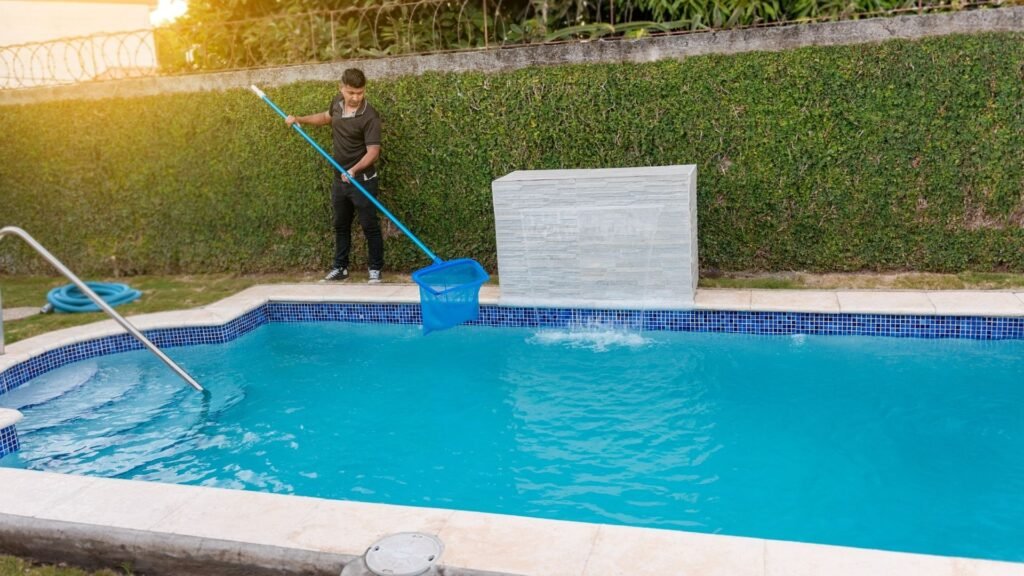
Saltwater pools need extra care after rainfall to address specific challenges. Your pool’s clarity depends on proper maintenance that goes beyond regular cleanup work.
Check and adjust salt levels
Rain dilutes the salt concentration in saltwater pools and affects chlorine generation. You should test salt levels with salt test strips to keep them between 2,700 and 3,400 ppm. Salt doesn’t evaporate like chlorine, but gets diluted every time it rains. Low salt levels prevent proper sanitization, while too much salt can damage your equipment.
Clean the salt cell
Rain increases scale buildup on salt cells. You need to check your salt cell for calcium buildup every three months or 500 operational hours. Scale on the plates reduces chlorine production by a lot and cuts short the cell’s life. Mix water and muriatic acid in a 4:1 ratio and clean for about 15 minutes. Vinegar works too as a gentler option.
Monitor chlorine output
Your salt generator needs higher output settings after rain to make up for lower chlorine levels. The chlorine should stay between 1-3 ppm to sanitize properly. Saltwater systems tend to have higher pH changes after rainfall.
Balance stabilizer (CYA) levels
Cyanuric acid plays a vital role in saltwater pools. The generated chlorine disappears quickly in sunlight without enough CYA, regardless of the salt levels.
Conclusion
A cloudy pool after rainfall can seem daunting, but you can restore water clarity quickly with a systematic approach. Start with physical cleaning before fixing chemical imbalances. Testing your water helps identify exactly what needs adjustment.
Rain will affect each pool differently based on its intensity, local environmental factors, and existing water chemistry. You might need to adapt these recommendations to your specific situation. On top of that, it helps to maintain your pool regularly before storm season to reduce rainfall on water quality.
Saltwater pool owners should check salt levels and cell condition right after heavy downpours. Salt concentration gets diluted and can stop your system from generating enough chlorine for proper sanitization.
A cloudy pool after rain is a common problem, but it shouldn’t ruin your swimming season. These practical steps and preventative measures will help you curb cloudiness whenever rain hits. Your crystal-clear pool will thank you, and swimmers will enjoy a safe, inviting environment, whatever the weather comes your way. Water clarity isn’t just about looks—it will give a proper sanitization level and prevent health risks from poorly treated water.